
There’s something fascinating about watching quality control performed by experienced hands. During a walk around at Olsen Metal A/S, I had the opportunity to follow John through a thorough Penetrant Testing (PT) process on deep-drawn components – an experience that truly put things into perspective. Deep drawing isn’t just metal in, punch down, application out. No – there’s so much more to it when material knowledge, specifications, and skilled craftsmanship unite.
When Details Make the Difference
This wasn’t my first introduction to PT testing. Previously, Jan had shown me the method in connection with weld inspection on a different type of component. But seeing John work with deep-drawn parts was a reminder of how versatile and critical this testing method is in modern manufacturing.
Penetrant Testing is a critical quality control method that reveals surface cracks and defects invisible to the naked eye – defects that could compromise the integrity and safety of components operating under high pressure in demanding applications.
A Methodical Approach to Safety
What struck me most during the testing was John’s thoroughness. He took the time to explain every single stage of the process, showed exactly which liquid and materials he used when, and most importantly – how long a waiting period needed to be calculated between each step. In cases where he was uncertain about a result, he didn’t hesitate to consult with a colleague. It’s this kind of professionalism that separates good quality control from excellent quality control.


The Process Step by Step
Time needed: 20 minutes
Penetrant – Cleaning – Developer
- Application of Penetrant
John carefully applies the red penetrant liquid with a brush to the component’s surface. He then waits 10 minutes – time for the liquid to penetrate even the smallest cracks or defects, if present.
- Cleaning
Wearing gloves (no one wants red fingers afterwards, as John noted with a smile), he thoroughly wipes and cleans off the red color with Cleaner. This step requires precision – all surface penetrant must be removed, while any liquid in cracks must remain.
- Developer spray applied
Now comes the critical moment. John sprays a white, chalk-like developer onto the component. If penetrant is trapped in cracks or defects, the developer will draw it out and create a clear red contrast against the white background. It’s elegant in its simplicity – a color contrast that makes even microscopic defects visible to the naked eye.
Expert Insight: Ensuring Integrity in Deep Drawn Components
Deep drawing puts significant stress on metal sheets. At Olsen Metal, we use Penetrant Testing (PT) to guarantee that the structural integrity is maintained and that no micro-cracks have formed during the high-pressure forming process.
After testing
The components are cleaned in our big sustainable rainwater washingmachine and sent for metal annealing. They then return for another round of deep drawing, followed by testing and cleaning once more, before heading back to annealing.
This process repeats several times before welding and assembly take place. The finished products are then shipped to our customers in the energy industry.
From Testing to Optimization
What makes John’s work particularly valuable is how the test results directly influence the manufacturing process. Based on the PT findings, he can adjust the mechanical parameters for the deep drawing equipment. He produces a batch, tests it, and fine-tunes the process accordingly.
Once the regular production run begins, random sample testing continues to ensure consistent quality. While this is a smaller production run, precision is paramount – the expectations for quality are exceptionally high in industries that demand durability and safety. There’s no room for compromise when components must perform flawlessly under extreme conditions.
Why It Matters
For Olsen Metal A/S’ customers in the energy industry, this test isn’t just a formality – it’s a critical safety measure. Components operating under high pressure and extreme conditions cannot afford hidden defects. An undetected crack can lead to component failure with potentially serious consequences for people, environment, and operations.
At Olsen Metal A/S, quality control is integrated throughout the entire manufacturing process. Learn more about our comprehensive metal forming and testing services.
PT Testing Across Industries
Penetrant Testing isn’t limited to one sector. The method is widely used:
Aerospace and Automotive Industries: Safety-critical parts such as castings, forgings, and welds must be free from even the smallest surface defects.
Food and Pharmaceutical Industries: Stainless steel components, processing equipment, and storage vessels require defect-free surfaces to maintain hygiene standards and prevent contamination.
Energy Production and Industrial Construction: Pipes, pressure vessels, and steel structures are subjected to enormous loads and require documented integrity.
Manufacturing of general production runs: Regardless of industry, detecting defects before components are put into use is crucial to avoid costly failures and safety risks.
High-Precision Deep Drawing for Demanding Industries
From maritime pump housings to pharmaceutical containers, our combined expertise in deep drawing and certified PT testing ensures 100% reliability.
Final Thoughts
My walk around Olsen Metal A/S underscored something fundamental: Quality isn’t just about advanced equipment or processes – it’s about people like John who take responsibility for every single component that passes through their hands. It’s about not cutting corners, about taking the time to do things right, and about having the courage to ask when in doubt.
In a world where we often talk about automation and efficiency, it was refreshing to see craftsmanship and expertise in practice. Some things simply cannot be rushed – and that’s exactly how it should be when safety is at stake.
– Thank you for your time.
Looking for a Reliable Deep Drawing Partner?
Don’t compromise on quality. Olsen Metal provides a full-service solution, combining advanced Deep Drawing technology with rigorous Penetrant Testing to deliver flawless components every time.
Frequently Asked Questions
PT stands for Penetrant Testing, a non-destructive quality control method that reveals surface cracks and defects in metal components. At Olsen Metal A/S, we use PT to ensure the integrity and safety of deep-drawn parts for demanding applications.
The PT process typically takes around 20 minutes per component, including a 10-minute penetration period, cleaning, and developer application. The exact duration depends on component size and complexity
PT is essential in aerospace, automotive, energy production, food processing, and pharmaceutical industries – anywhere safety-critical components must be defect-free before use. 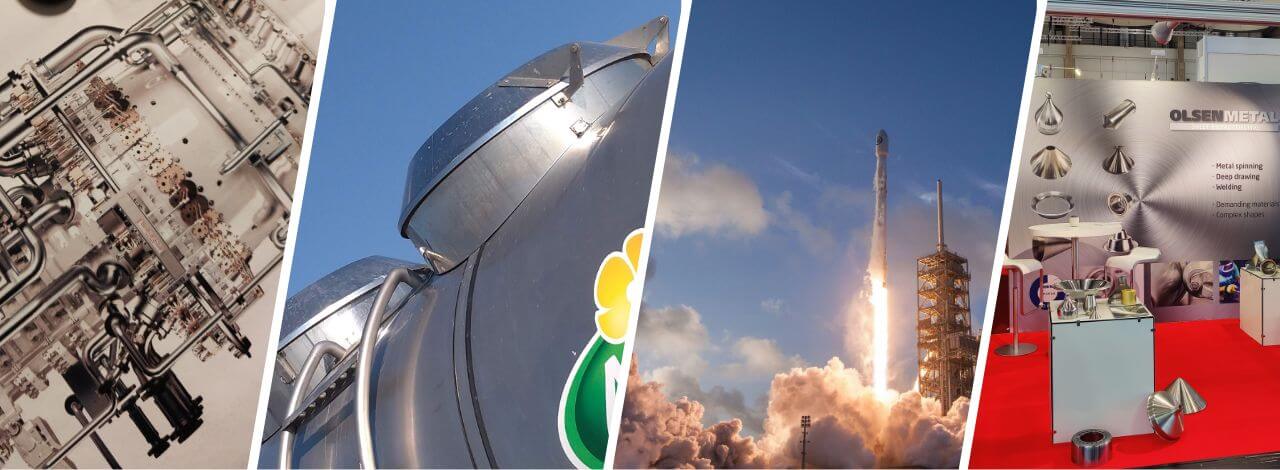
No, PT only detects surface-breaking defects such as cracks, porosity, and seams. For internal defects, other NDT methods like ultrasonic testing (UT) or radiographic testing (RT) are required.
Like John from Olsen Metal explained to me, deep drawn components often operate under high pressure in critical applications. PT ensures that surface defects created during forming are detected before the component enters service, preventing potential failures.
PT is specifically designed for surface defect detection and is cost-effective, portable, and works on all non-porous materials. Other NDT methods like UT or RT detect internal defects but require more specialized equipment.